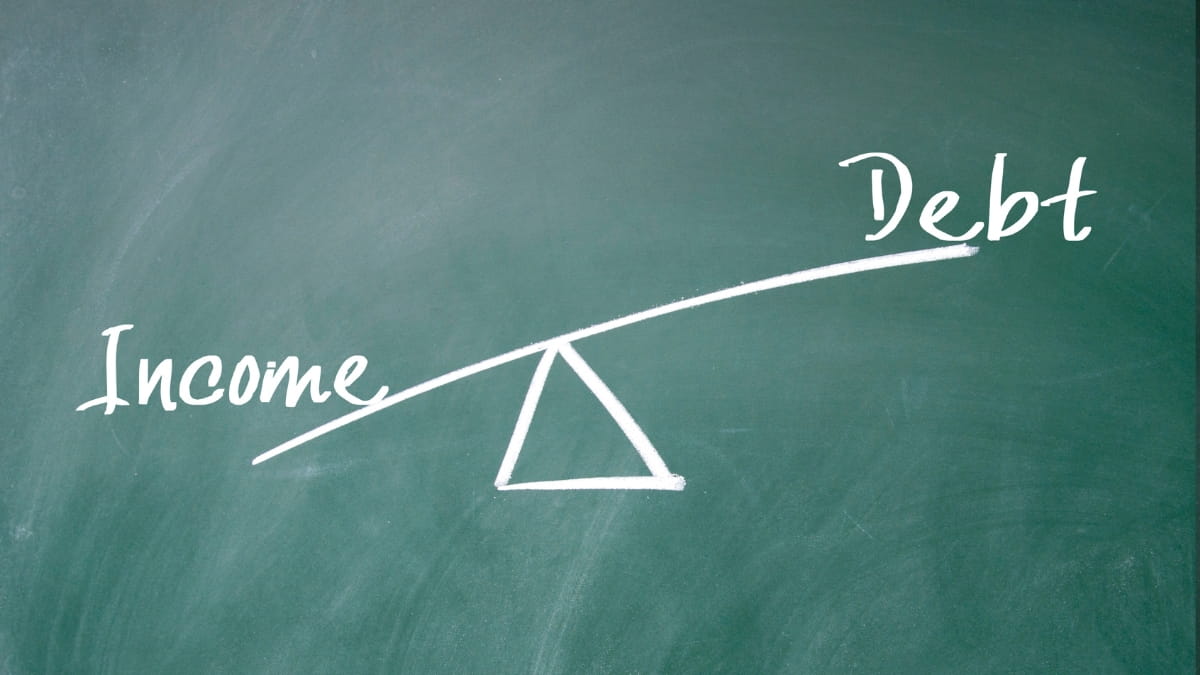

Has your loan application been rejected despite having a stable income and a decent credit score? One of the most common reasons for loan rejection in India is a high Loan-to-Income (LTI) ratio.
A Loan-to-Income ratio measures the relationship between the amount you want to borrow and your annual income. Banks and non-banking financial companies (NBFCs) use this metric to determine whether the requested loan amount aligns with your repayment capacity.
This guide is designed for prospective borrowers in India who are planning to apply for a personal loan, home loan, education loan, vehicle loan, or loan against property. If your application has been declined because of a high LTI ratio, this article will help you understand what went wrong and how to improve your eligibility.
Understanding your LTI ratio matters because repeated loan rejections can affect your confidence, trigger multiple credit inquiries, and delay important financial goals. More importantly, a high LTI ratio may indicate that the proposed borrowing amount could place excessive pressure on your finances.
By learning how lenders assess affordability and what practical steps you can take, you can improve your chances of approval while making better long-term borrowing decisions.
What Is a Loan-to-Income Ratio?
Loan-to-Income ratio compares the total amount you wish to borrow with your annual gross income.
Formula for Loan-to-Income Ratio
LTI Ratio = Total Loan Amount ÷ Annual Gross Income
For example, suppose your annual income is ₹8 lakh and you apply for a home loan of ₹40 lakh.
₹40,00,000 ÷ ₹8,00,000 = 5
Your LTI ratio is 5:1, which means you are requesting a loan amount equal to five times your annual income.
Different lenders have different LTI thresholds depending on the loan type, risk profile, occupation, and repayment history.
Loan-to-Income Ratio vs Debt-to-Income Ratio
Many borrowers confuse LTI with Debt-to-Income (DTI) ratio or Fixed Obligation to Income Ratio (FOIR), but they serve different purposes.
| Metric | What It Measures | Formula | Common Usage |
|---|---|---|---|
| Loan-to-Income (LTI) | Total loan amount compared to income | Loan amount ÷ annual income | Determines maximum loan eligibility |
| Debt-to-Income (DTI) | Monthly debt payments compared to income | Monthly obligations ÷ monthly income | Measures repayment capacity |
| FOIR | Fixed monthly obligations as a percentage of income | Total EMIs ÷ net monthly income | Widely used by Indian lenders |
In India, most banks evaluate all three metrics together during underwriting.
Why Indian Lenders Use Loan-to-Income Ratio
Lenders want to ensure that borrowers can comfortably manage their repayment obligations.
A high LTI ratio increases the risk of:
- Payment defaults
- Missed EMIs
- Loan restructuring requests
- Credit score deterioration
- Financial stress during emergencies
The Reserve Bank of India regularly emphasizes responsible lending and prudent credit assessment practices for regulated financial institutions.
Banks and NBFCs analyse your affordability to protect both their financial risk and your long-term financial well-being.
What Is Considered a High Loan-to-Income Ratio in India?
There is no universal benchmark because acceptable LTI ratios vary based on loan type and lender policies.
However, the following ranges are commonly observed.
| Loan Type | Typical LTI Range |
|---|---|
| Personal loan | 1x to 2.5x annual income |
| Car loan | 0.5x to 1.5x annual income |
| Home loan | 3x to 6x annual income |
| Loan against property | 2x to 4x annual income |
| Education loan | Based on future earning potential and co-applicant income |
Salaried professionals working for reputed organisations may qualify for higher LTI ratios than self-employed borrowers due to perceived income stability.
Common Reasons Your Loan Was Rejected Due to a High LTI Ratio
You Applied for a Larger Loan Amount
Many borrowers calculate eligibility based solely on online calculators without accounting for lender-specific policies.
Even if you believe the EMI is manageable, the lender may consider the total borrowing amount excessive relative to your income.
Your Existing EMIs Are Too High
Outstanding obligations such as:
- Personal loans
- Credit card EMIs
- Car loans
- Consumer durable loans
- Buy Now, Pay Later (BNPL) accounts
Can reduce your borrowing capacity.
Most lenders prefer your total monthly obligations to remain within a specific FOIR threshold, usually between 40% and 60% of your net monthly income.
Your Income Could Not Be Fully Verified
Variable income sources such as bonuses, commissions, incentives, freelance projects, and cash earnings may not always be considered.
Self-employed borrowers often face this challenge due to inconsistent cash flows or insufficient documentation.
Recent Changes in Employment
Frequent job changes, probation periods, or recent career transitions may affect lender confidence.
Most banks prefer stable employment history with a minimum tenure requirement.
Economic and Industry Conditions
Lenders periodically tighten underwriting criteria during periods of:
- Economic uncertainty
- Rising interest rates
- Sector-specific slowdowns
- Increased default rates
Approval criteria that applied a year ago may no longer be valid.
How Lenders in India Assess Loan Eligibility
LTI ratio is only one component of the underwriting process.
Indian lenders also evaluate:
- Monthly income
- FOIR
- Credit score
- Employment stability
- Existing liabilities
- Savings patterns
- Banking behaviour
- Age and retirement horizon
- Employer profile
- Residence stability
According to the guidelines issued by the Credit Information Bureau (India) Limited and regulated lending institutions, repayment history remains a critical factor in assessing borrower risk.
What Should You Do After a Loan Rejection?
Understand the Exact Reason for Rejection
Do not assume that your credit score was the only issue.
Ask the lender for:
- The specific reason for rejection
- The LTI threshold used
- Whether FOIR contributed to the decision
- Recommended steps before reapplying
This information helps you create a clear improvement plan.
Check Your Credit Report
Review your credit report from major Indian credit bureaus, including:
- TransUnion CIBIL
- Experian India
- Equifax India
- CRIF High Mark
Look for:
- Incorrect outstanding balances
- Closed loans marked as active
- Duplicate accounts
- Reporting errors
- Unauthorised inquiries
Even minor inaccuracies can affect your borrowing profile.
Avoid Multiple Loan Applications
Submitting several applications within a short period can trigger multiple hard inquiries.
Frequent inquiries may indicate credit hunger and negatively impact your creditworthiness.
Instead, improve your profile before reapplying.
Seven Effective Ways to Improve Your Loan-to-Income Ratio
1. Reduce the Loan Amount
Reassess whether you truly need the requested amount.
You can lower your borrowing requirement by:
- Increasing your down payment
- Using savings strategically
- Delaying non-essential expenses
- Choosing a less expensive asset
A lower loan amount directly reduces your LTI ratio.
2. Increase Your Income
A higher income improves your LTI ratio immediately.
Consider:
- Negotiating a salary increase
- Taking up freelance assignments
- Building passive income streams
- Monetising specialised skills
Ensure all income sources are properly documented.
3. Close Existing Small Loans
Many borrowers overlook small EMIs from:
- Mobile phone financing
- Consumer durable loans
- BNPL services
- Credit card EMIs
Closing these obligations can improve both FOIR and overall eligibility.
4. Add a Co-Applicant
Including a spouse, parent, or earning family member can increase total household income.
This strategy is particularly common for home loans.
Remember that the co-applicant becomes equally responsible for repayment.
5. Consolidate High-Interest Debt
Debt consolidation combines multiple loans into a single facility.
Benefits may include:
- Lower monthly obligations
- Simplified repayment
- Better cash flow management
However, evaluate processing fees and total interest costs before proceeding.
6. Improve Income Documentation
If you are self-employed, maintain:
- Income tax returns
- GST returns
- Bank statements
- Profit and loss statements
- Audited financials
Clear documentation can significantly improve lender confidence.
7. Wait Before Reapplying
Sometimes, waiting is the smartest decision.
Use the next three to six months to:
- Reduce debt
- Build savings
- Improve your credit profile
- Stabilise your income
Strategic timing can substantially increase approval chances.
Real-Life Example: How Reducing Debt Improved Loan Eligibility
Rohit, a 32-year-old IT professional in Bengaluru, wanted a ₹55 lakh home loan.
Although he earned ₹12 lakh annually and maintained a credit score above 780, his application was rejected.
The lender identified two key concerns:
- A high LTI ratio of 4.58
- Existing EMIs consuming nearly 55% of his monthly income
Over the next six months, Rohit prepaid his personal loan, closed two credit card EMIs, and added his spouse as a co-applicant.
His revised application reflected a healthier FOIR and lower effective LTI ratio.
The bank approved the loan at a competitive interest rate.
Common Mistakes to Avoid After a Loan Rejection
Applying Again Immediately
Reapplying without addressing the root cause often leads to another rejection.
Hiding Existing Debt
Lenders access information from credit bureaus and banking records.
Undisclosed liabilities can damage trust.
Relying Only on Credit Score
A strong credit score cannot compensate for poor affordability metrics.
Using Unverified Income
Only declare income that you can substantiate with documents.
Ignoring Emergency Savings
Borrowers who exhaust their savings for a down payment may struggle with future financial shocks.
Maintain an emergency fund covering at least three to six months of expenses.
How Long Should You Wait Before Reapplying?
The ideal waiting period depends on your ability to improve your financial profile.
Consider reapplying when:
- Your income has increased
- Your outstanding debt has decreased
- Your credit report has been corrected
- Your employment situation has stabilised
- Your loan requirement has reduced
For most borrowers, a waiting period of three to six months is practical.
Expert Insights: Focus on Affordability, Not Maximum Eligibility
Just because a lender approves a higher amount does not mean you should borrow the maximum possible.
Financial planners generally recommend maintaining sufficient flexibility in your budget for:
- Medical emergencies
- Education expenses
- Job transitions
- Inflation
- Unexpected repairs
A comfortable EMI today may become challenging if your circumstances change.
Responsible borrowing means aligning your loan amount with your long-term financial goals.
The Growing Role of Alternative Data in Lending
Indian lenders are increasingly using technology-driven underwriting models.
Beyond traditional metrics, some digital lenders analyse:
- Bank transaction patterns
- Utility bill payments
- Cash flow consistency
- Digital payment behaviour
- Employment trends
While LTI remains important, modern credit decisions are becoming more holistic.
Borrowers who maintain healthy financial habits may benefit from these evolving assessment methods.
Key Takeaways
A loan rejection due to a high Loan-to-Income ratio is not permanent.
It signals that the requested loan amount exceeds your current borrowing capacity based on lender guidelines.
Before reapplying:
- Understand the exact reason for rejection
- Review your credit report
- Reduce existing debt
- Improve income documentation
- Lower your loan requirement
- Avoid multiple applications
Most importantly, focus on affordability rather than approval alone.
The right loan is not the largest amount you can obtain but the amount you can comfortably repay without compromising your financial stability.
Frequently Asked Questions
The ideal ratio depends on the loan type. Generally, lower LTI ratios indicate lower risk and improve approval chances.
No. Lenders also evaluate LTI, FOIR, income stability, employment history, and existing obligations.
Yes. Adding a co-applicant increases the total household income considered by the lender, potentially improving eligibility.
Closing credit cards may not directly affect your LTI ratio, but reducing outstanding balances and EMIs can improve affordability metrics.
Divide the total loan amount you want by your annual gross income.
For example:
₹30 lakh loan ÷ ₹10 lakh annual income = 3:1 LTI ratio.
Depending on your situation, meaningful improvements can often be achieved within three to six months through debt reduction, higher income, and better financial planning.

I am an experienced advocate with 8 years of expertise in handling legal matters related to loan settlement services. I am skilled in providing effective legal solutions, negotiating settlements, and representing clients in complex financial disputes, ensuring their rights are protected throughout the process.